Science & Insights
Exfoliation by Design:
A BY-O-BEAUTY Whitepaper
Rethinking the Role of Particles in Modern Personal Care
Public thought-leadership paper. Detailed technical specifications are available to qualified formulators and technical partners upon request.
Executive takeaway: Physical exfoliation is not simply about adding particles to a formula. It is about matching particle characteristics, application, sensory expectations and formulation performance.
Introduction
Exfoliation is one of the oldest ideas in personal care.
The principle is simple: remove accumulated dead cells from the surface of the skin to reveal a smoother, fresher-looking surface underneath.
But modern formulation has made the question much more sophisticated.
Today, formulators are not simply asking: ‘Does this ingredient exfoliate?’ They are asking: How does it exfoliate? How does it feel? How controllable is the sensory experience? How does it fit within the complete formulation? And can the material story align with the expectations of a new generation of personal care products?
These questions are changing the way physical exfoliants should be evaluated.
For BSB Nanotech, they also provide the foundation for BY-O-BEAUTY, a personal care platform built around Biosilico rice husk-derived silica.
The opportunity is not merely to replace one scrubbing material with another. It is to think about exfoliation as a formulation design problem.
1. Why Exfoliation Matters
Skin continuously renews itself. New cells form below the surface, move through the epidermis and eventually reach the outermost layer of the skin. At the surface, older cells are naturally shed.
This natural process is not always perfectly uniform. Age, environmental exposure, dehydration and lifestyle factors can affect the way surface cells accumulate and are released. When dead cells remain on the surface, the skin may appear duller, rougher or less even.
Exfoliation helps manage this surface build-up. The objective is not simply aggressive removal.
A well-designed exfoliating formulation should create an appropriate balance between removal of accumulated surface cells, skin feel during use, sensory feedback, product format, rinse behaviour, and the experience expected by the consumer.
This is why exfoliation should be considered as part of the overall formulation architecture, rather than as an isolated ingredient function.
2. Three Routes to Exfoliation
Personal care formulators generally work with three broad approaches.
Physical exfoliation uses particles to mechanically interact with the skin surface and help lift away accumulated dead cells. Its key advantage is immediacy. The consumer can feel the product working during application. But that same sensory interaction means that particle characteristics matter enormously.
Chemical exfoliation uses ingredients such as acids to loosen the bonds between surface cells. The performance of these systems depends on factors including active concentration, pH, formulation environment and the intended use of the finished product.
Enzymatic systems use enzymes to help break down surface proteins associated with dead skin cells. They can offer a different sensory and formulation approach from both physical particles and acid-based systems.
None of these routes is inherently better in every situation. They answer different formulation objectives. For physical exfoliation, however, one factor becomes central: the particle itself.
3. A Particle Is Not Just a Particle
Two ingredients can both be described as physical exfoliants and still create very different experiences on the skin.
Particle size affects how strongly an exfoliant is perceived during application. A formulation designed for a mild facial experience will not necessarily require the same particle profile as an intensive body scrub.
Particle distribution also matters. A controlled particle population helps formulators create a more predictable sensory profile from one application to another.
The physical nature of the material affects how it interacts with the skin and with the formulation itself. This can influence tactile feedback, perceived abrasiveness and the overall quality of the exfoliation experience.
Consumers do not all want the same exfoliating sensation. Some expect a barely perceptible polishing effect. Others associate a clearly noticeable scrub sensation with efficacy. Body-care products may intentionally seek a more substantial tactile experience than facial products.
Exfoliation intensity is not one universal target. It is a design choice.
4. The Formulator’s Real Challenge: Performance Versus Experience
The traditional conversation around physical exfoliants often focuses on origin: natural or synthetic, plant-based or mineral, microplastic or plastic-free.
These questions remain important, but they are not enough. A material may have an attractive origin story and still fail to deliver the right formulation experience.
The formulator must also consider whether the exfoliant provides the intended tactile profile, whether the particle experience is appropriate for the target application, whether it remains consistent within the formulation, whether it affects colour or odour, and how it behaves in the finished product rather than in isolation.
A facial cleanser, body polish, rinse-off scrub, spa treatment and specialist hand or foot product may all require different exfoliation characteristics.
The question is not ‘What is the best exfoliant?’ It is ‘What is the right exfoliant for this formulation?’
5. Where Rice Husk-Derived Silica Changes the Conversation
Silica is already familiar to the personal care industry. What changes with Biosilico is the starting point.
Instead of beginning with conventional mineral feedstocks, BSB Nanotech works with silica derived from rice husk, an agricultural resource generated in large quantities by rice production. Through controlled processing, this silica-rich resource can be transformed into functional amorphous silica for industrial and personal care applications. For personal care, this creates an interesting intersection between two objectives: material performance and material origin.
BY-O-BEAUTY is built around this intersection. The platform uses rice husk-derived silica as the foundation for physical exfoliation materials designed around different sensory and application requirements.
Rather than presenting exfoliation as a single product specification, the platform recognises that formulators may require different experiences. Some applications prioritise a softer, more cushioned exfoliation feel. Others require more distinct tactile feedback. Some are designed primarily for facial care. Others are developed for body, hand, foot, spa or specialist exfoliation.
This makes BY-O-BEAUTY less about a single ingredient and more about a portfolio approach to sensory design.
6. From Facial Polish to Body Care
Physical exfoliation exists across a broad range of personal care formats.
Facial applications generally require careful management of tactile intensity and sensory comfort. The exfoliant needs to work within a formulation that may also contain surfactants, emollients, humectants and active ingredients.
Exfoliation can also be combined with cleansing to create multifunctional rinse-off formats. In these systems, particle suspension, distribution and rinse characteristics become part of the formulation challenge.
Body applications often provide greater freedom to design a more noticeable tactile experience. The desired sensory profile may range from gentle polishing to a much more substantial scrubbing sensation.
Physical particles can add another sensory dimension to rinse-off masks or treatment formats. Hand and foot care may call for a more robust exfoliation concept, while spa-inspired formulations often place greater emphasis on tactile experience, massage sensation and ritual.
This diversity reinforces one key point: there is no single ideal exfoliant profile for personal care. Application determines the target.
7. Natural Origin Should Be the Beginning of the Conversation, Not the End
Sustainability has changed ingredient development. Formulators, brands and consumers increasingly want to understand where materials originate and how resources are used.
Rice husk provides a compelling starting point because it connects agricultural production with new material applications.
But responsible ingredient communication should distinguish between origin and performance. ‘Rice husk-derived’ describes where the silica journey begins. It does not, by itself, prove how a finished cosmetic product will perform.
That must still be established through formulation development, stability assessment, compatibility work, safety evaluation and appropriate claim support.
The strongest future for sustainable materials will not come from asking consumers or formulators to accept reduced performance in exchange for a greener story. It will come from materials that allow both conversations to coexist: Where does it come from? And what can it do?
8. From Ingredient Selection to Formulation Development
The most effective way to evaluate a physical exfoliant is within the intended formulation.
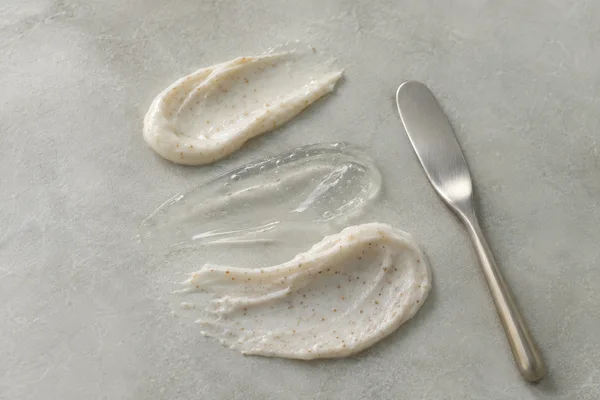 Step 1Define the intended experience
Is the target gentle polishing, noticeable exfoliation, intensive body scrubbing, daily cleansing, or a spa-style sensory treatment?
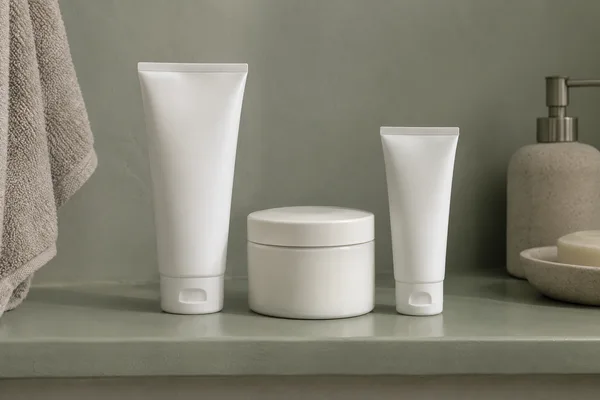 Step 2Define the application
Facial, body, hand and foot products do not necessarily require the same particle or sensory characteristics.
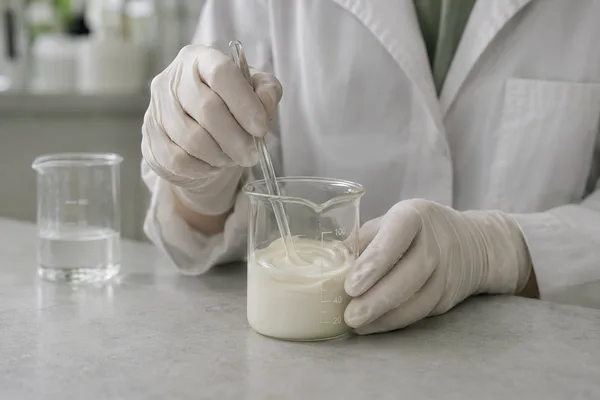 Step 3Evaluate the ingredient in the actual formulation
Particle behaviour should be considered in the finished base rather than judged solely as a dry material.
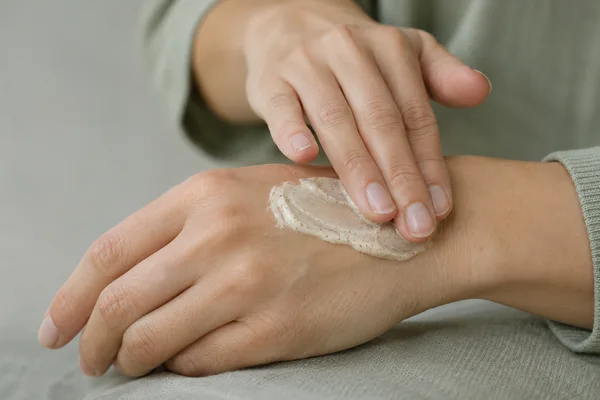 Step 4Assess sensory performance
How does the formulation feel during spreading, massage and rinsing? Does the tactile experience match the positioning of the product?
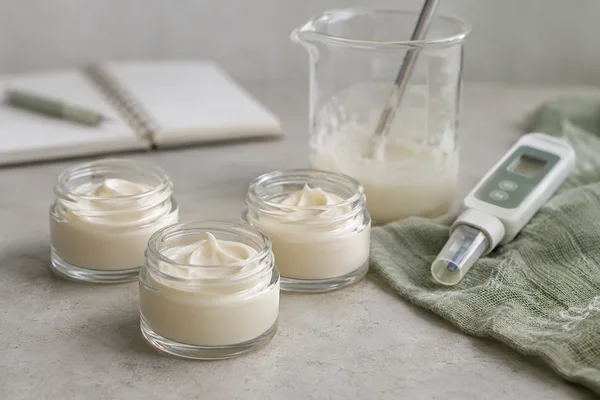 Step 5Validate the finished formulation
The final product should undergo the appropriate stability, compatibility, safety and performance evaluation required for its intended market and claims.
This is where supplier and formulator collaboration becomes particularly important.
9. Why Technical Selection Belongs in the Formulation Conversation
Not every technical specification belongs in a public marketing document.
Different formulations require different material characteristics, and isolated specification values can easily be misunderstood without the context of the intended product.
For this reason, BSB Nanotech works directly with formulators and technical partners to understand the product format, desired sensory profile, intended area of use, formulation base, processing requirements and development objective.
From there, the technical team can recommend an appropriate BY-O-BEAUTY option, provide the relevant technical documentation and support sample evaluation.
The specification should follow the formulation question, not replace it.
10. The Next Generation of Exfoliation Is About Choice
Physical exfoliation is sometimes described as a simple category. In reality, it sits at the intersection of material science, sensory engineering, formulation design and consumer expectation.
The next generation of exfoliating products will therefore not be defined only by how strongly they scrub. They will be defined by how intelligently formulators match particle, formulation, application and sensory experience.
Rice husk-derived silica introduces another dimension to that equation by connecting physical exfoliation with a renewable agricultural starting point.
For BSB Nanotech, that is the opportunity behind BY-O-BEAUTY. Not simply another exfoliating material, but a platform for designing different exfoliation experiences from a different material origin.
Closing Perspective
Personal care innovation increasingly asks ingredients to do more. They must perform. They must fit the formulation. They must contribute to the intended sensory experience. And increasingly, they must also tell a more thoughtful material story.
BY-O-BEAUTY brings those conversations together through Biosilico rice husk-derived silica.
From natural origin to purposeful formulation performance.
For formulators, R&D teams and personal care manufacturers interested in evaluating BY-O-BEAUTY for a specific application, BSB Nanotech can provide samples, technical documentation and formulation-specific guidance upon request.
Discuss your formulation or request a sample
[email protected] · BY-O-BEAUTY
BY-O-BEAUTY | Biosilico for Beauty & Personal Care